
Home › The BuaFlow Blog › Eldercare
EldercareCaregiver emergency binder: what to put in it, and how to build it over the holidays
When an aging parent ends up in the ER, the first questions are always the same: What medications? Which doctors? Who can make decisions? A caregiver emergency binder puts every answer in one place. Here's exactly what goes in it, how to fill it in a single holiday visit, and the Nevada documents worth knowing about.
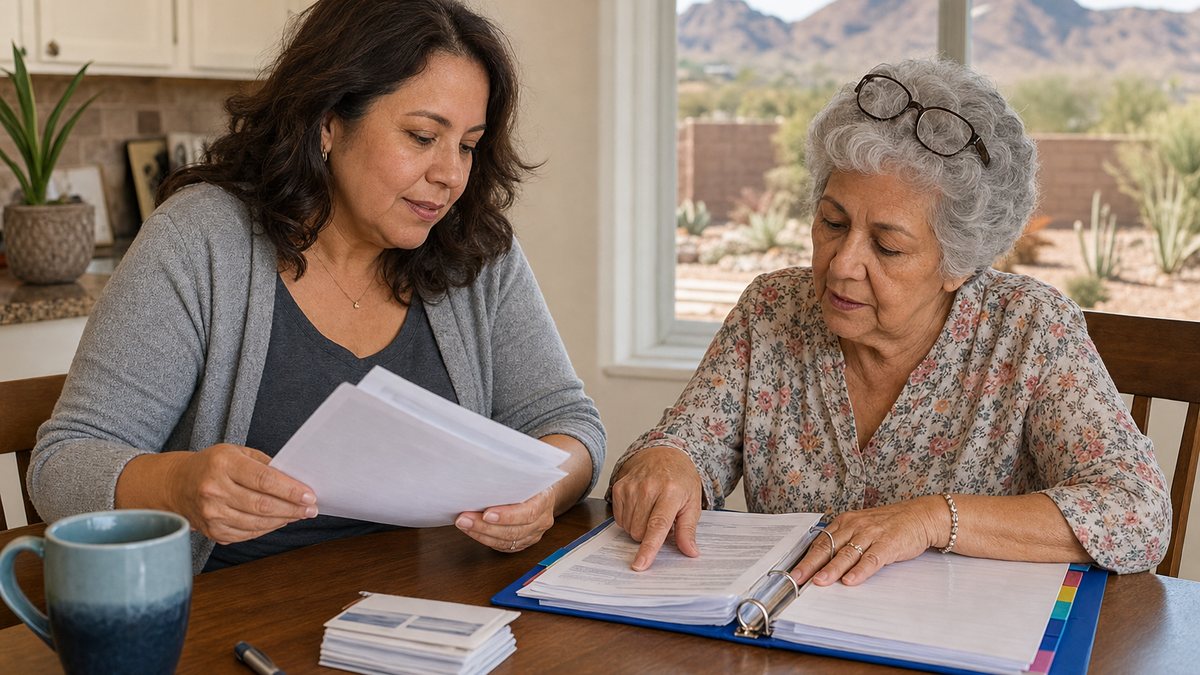
Key facts at a glance
- You're not alone: 63 million Americans, nearly 1 in 4 adults, provided ongoing care to a family member or friend in the past year, up 20 million since 2015, according to AARP and the National Alliance for Caregiving's Caregiving in the U.S. 2025 (July 2025).
- Most caregivers juggle work too: 6 in 10 family caregivers are employed, and over half handle tasks such as medication management (AARP/NAC, 2025).
- Emergencies are common: Over 14 million adults 65 and older, about 1 in 4, report falling every year, according to the CDC (page updated September 4, 2026).
- HIPAA isn't a wall: Providers may share information with family involved in a patient's care, but aren't required to unless you're the patient's personal representative (HHS).
- Nevada has a free registry: The Secretary of State's Nevada Lockbox stores advance directives, POLST forms and guardianship nominations at no cost, with a wallet card for the registrant (Lockbox brochure).
A caregiver emergency binder is the most useful thing you can make for an aging parent this holiday season. It costs a few dollars in supplies and an afternoon of conversation, and it turns the worst phone call of the year, "Mom fell and they're taking her to the hospital," into something you can handle calmly instead of frantically digging through drawers and calling siblings who don't know the answers either.
Thanksgiving is a good moment to do it. Families are in the same room, often for the only time all year. Your parent's papers are in the house. And it's easier to say "let's get your info organized while we're all here" than to bring it up out of nowhere in March. In Las Vegas, the Clark County School District calendar has no school on November 26–27, 2026, so many families have a long weekend together. This guide walks you through what to include, how to collect it without turning dinner into an interrogation, and how to keep it current.
What is a caregiver emergency binder?
It's a single, organized collection of the information someone would need to look after your parent if your parent couldn't speak for themselves, or if you, the usual caregiver, weren't there. Think of it as the answer key for the questions emergency rooms, paramedics, doctors and relatives ask.
Most families end up with three layers:
- A one-page emergency info sheet that fits on the fridge, in a wallet or in a phone photo. It has the critical facts only: name, date of birth, conditions, medications, allergies, doctors, emergency contacts and where the legal documents are.
- The binder itself: the full set of lists and copies, organized into tabs.
- A secure digital copy (scans or photos) that a trusted sibling or adult child can open from anywhere.
The binder doesn't replace your parent's doctors, a lawyer or a care manager. It just makes sure the right people have the right information at the moment it matters.
Build the binder with your parent, not about them. Framing matters: "If something happens, I want the hospital to know exactly what you want" lands very differently from "We need to talk about your paperwork." Your parent stays in charge of their own information, and you get a better binder because they know things nobody else does.
Why do families need one before a crisis, not during one?
Because the moment you need the information is the worst moment to find it. A few numbers explain why this is worth doing now.
Family caregiving is now a mass experience. AARP and the National Alliance for Caregiving's Caregiving in the U.S. 2025 report, based on a nationally representative survey of 6,858 caregivers conducted through an Ipsos panel, found that 63 million Americans provided ongoing care in the past year, an increase of 20 million from 2015. Six in ten of those caregivers also hold jobs. Over half manage medical or nursing tasks like medications or wound care, yet just over 20% have received formal training for those tasks. When the person who usually manages everything is at work, on a plane or sick themselves, the knowledge needs to live somewhere other than their head.
Emergencies with older adults are also common. The CDC reports that over 14 million adults 65 and older, about 1 in 4, report a fall every year, and that the age-adjusted fall death rate rose 21% between 2018 and 2024. A fall, a sudden illness or a confused episode often starts with a 911 call and a hospital admission, which means strangers asking detailed questions fast.
And families are spread out. A sibling in another state may be the one who gets the call from the hospital. If the binder is organized and a digital copy is shared, it doesn't matter who answers the phone.
What should go in a caregiver emergency binder?
Use tabs so anyone can find a section in seconds. Here's a practical structure, with what goes in each tab.
Tab 1: Emergency info sheet (the front page)
- Full legal name, preferred name, date of birth, address, primary language
- Current diagnoses and major health conditions (in your parent's own words or from their doctor's paperwork)
- Allergies, including to medications, latex and foods
- A short list of current medications (full list in Tab 2)
- Primary care doctor, key specialists and preferred hospital
- Emergency contacts in order: who to call first, second and third
- Where the legal documents are, and whether they're registered (see Tab 5)
- Devices and aids: hearing aids, glasses, dentures, pacemaker, mobility aids, oxygen
Tab 2: Medications and allergies
- Every prescription, over-the-counter medicine, vitamin and supplement: name (brand and generic), dose, how often, what it's for and who prescribed it
- Pharmacy name and phone number
- Date the list was last updated, written at the top
The American Geriatrics Society's Health in Aging Foundation recommends keeping an up-to-date medication list "that includes the names (brand and generic) of any drugs you're taking and the doses" as part of emergency preparedness. Ask your parent's pharmacist or doctor to review the list with you; they can catch duplicates and drugs that are no longer prescribed.
Tab 3: Doctors, care team and health history
- Names, specialties, phone numbers and patient-portal logins location (not the passwords themselves) for each provider
- Recent hospital stays, surgeries and major test results, with dates
- Home health, therapy or in-home care agencies and their contacts
- Copies of the most recent visit summaries or a problem list from the doctor's office
Tab 4: Insurance and ID
- Copies (front and back) of Medicare, Medicaid, Medicare Advantage or supplemental plan cards, plus any prescription drug plan card
- Copy of a photo ID
- Long-term care insurance policy number and contact, if any
Tab 5: Legal and end-of-life documents
- Durable power of attorney for health care decisions (Nevada's term for a health care proxy)
- Living will or advance directive
- POLST and/or out-of-hospital DNR, if your parent's doctor has completed one
- Financial power of attorney, and where the will or trust is kept (you don't need a copy of the will itself in an emergency binder)
- Nevada Lockbox registration number, if documents are registered
Tab 6: Household and daily life
- Who has a house key, garage code or lockbox code (store codes securely, not on the front page)
- Pets and who cares for them
- Utilities, HOA, landlord and key service contacts
- Daily routine notes: sleep, meals, mobility, what calms them when they're upset
Tab 7: Money basics (optional, kept separately if sensitive)
- A list of banks and bill accounts (institution names, not full account numbers), and who is authorized on them
- Recurring bills that would need attention during a long hospital stay

Paper binder, digital copy or both: which is best?
Most families need both. Here's how the options compare.
| Format | Best for | Weak spots | Tips |
|---|---|---|---|
| Paper binder at the parent's home | Paramedics, home visitors, parents who prefer paper | Only useful if people know where it is; easy to let it go stale | Keep it in one obvious spot (by the front door or on the fridge) and tell everyone where |
| One-page info sheet | Wallet, purse, fridge door, glove box | Not enough detail for a hospital admission | Date it; reprint every time a medication changes |
| Shared digital folder | Long-distance siblings, travel, hospital calls | Privacy risk if shared carelessly; depends on phone signal and logins | Use a secure, password-protected account; share only with people your parent approves |
| Phone photos / medical ID | Fastest access in the moment | Photos get buried; may be out of date | Make an album or note with just the key pages |
| Nevada Lockbox (advance directives only) | Making legal documents available to providers statewide | Doesn't hold medication lists or insurance info | Pair it with the binder: Lockbox number goes on page one |
The binder that works is the one that's current. A beautiful 60-page binder with last year's medications is more dangerous than a scrappy one-page sheet updated last week. Start small: get the one-page emergency info sheet right first, then grow the binder tab by tab. That's the same order CareBridge is built around.
How do you build a caregiver emergency binder over a holiday visit?
You don't need a full weekend. Here's a realistic plan for one visit, split into short sessions so it doesn't take over the holiday.
- Before you travel (15 minutes). Buy a 1.5-inch binder, seven tab dividers, sheet protectors and a zipper pouch. Print a blank emergency info sheet. Text siblings: "I'm putting together an emergency folder for Mom this week. What do you know that I might not?"
- The ask (5 minutes). Pick a calm moment, not mid-meal. Try: "If something happened and you went to the hospital, I'd want them to know exactly what you take and what you want. Can we get that on paper together?"
- Medications (30 minutes). Gather every bottle, including vitamins and creams. Photograph each label, then write the list together. Ask what each one is for; the answers are often surprising.
- Cards and contacts (20 minutes). Copy or photograph insurance cards and ID front and back. Go through your parent's phone or address book for doctors, pharmacy and neighbors.
- Legal documents (20 minutes). Ask whether they have a health care power of attorney, living will or POLST, and where the originals are. Don't take originals; copy them. If nothing exists, note it as a follow-up with their doctor or an attorney.
- Assemble and place (15 minutes). Put everything in the binder, put the info sheet on the front, and agree on where it lives. Show whoever lives closest.
- Share (10 minutes). Scan or photograph the key pages into a secure shared folder that your parent has agreed to. Put a calendar reminder on your phone to review it in three months.
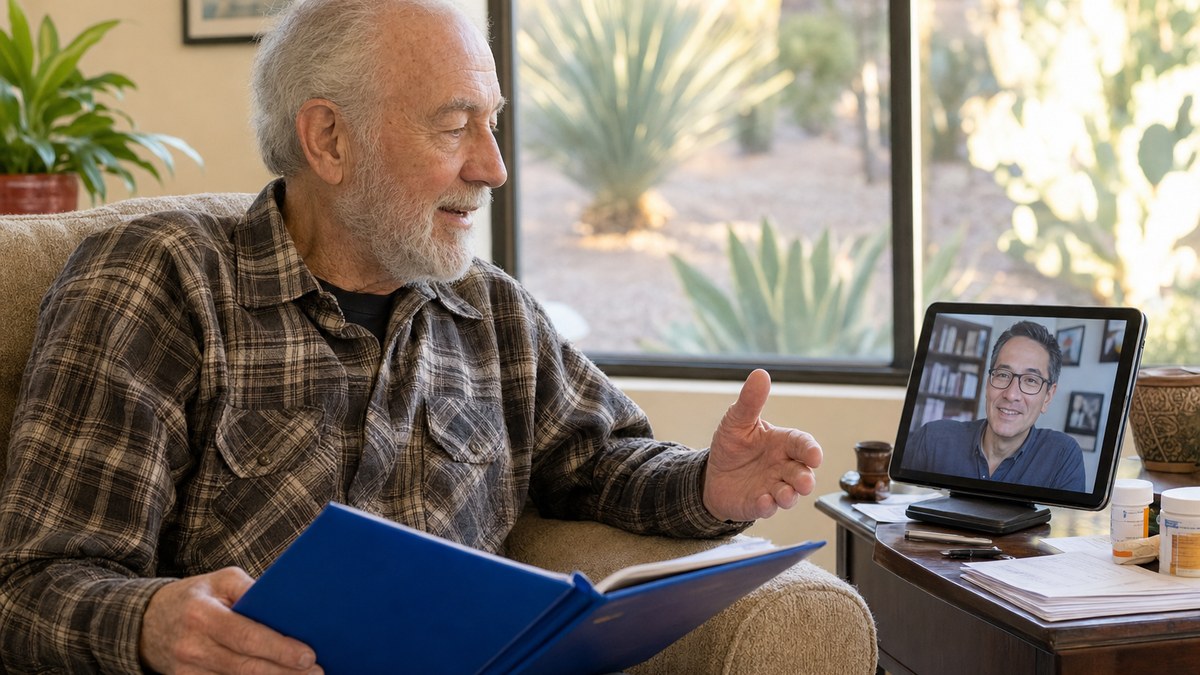
Which legal documents belong in the binder in Nevada?
This is general information, not legal advice. Laws differ by state, and an elder law attorney can tell you what your parent needs. But it helps to know the terms you'll hear in Nevada.
- Durable power of attorney for health care decisions. Names someone to make medical decisions if your parent can't. A copy belongs in the binder, and the named agent should know where the original is.
- Living will / advance directive. Describes the kinds of treatment your parent would or wouldn't want near the end of life.
- Nevada POLST. According to Nevada's Division of Public and Behavioral Health (page last updated December 10, 2025), a POLST is a medical order completed by a physician, APRN or physician assistant after a discussion with the patient about end-of-life treatment wishes. It can't be honored unless it's signed by the patient (or their legal representative) and the clinician. There's no charge for a POLST. Hot pink paper is preferred but not required. The state recommends registering the completed form with the Lockbox and giving a copy to all of the patient's medical providers.
- Out-of-hospital DNR. A separate Nevada document for people who don't want CPR outside a hospital; the same state page lists a $5 fee for it.
The Nevada Lockbox. The Nevada Secretary of State runs a registry, the Nevada Lockbox, for advance directives (living wills, durable powers of attorney for health care, DNR orders, POLST and psychiatric advance directives) and for guardianship nominations. According to the Secretary of State's Lockbox brochure (template dated January 2019), registration is voluntary and free, authorized entities such as hospitals and hospice providers can access registered documents, and registrants receive a wallet-sized card with their registration number. Procedures can change, so check the current instructions at NevadaLockbox.nv.gov before filing. If your parent registers, write the Lockbox number on page one of the binder.
The single most important legal question for the binder is simple: "If you couldn't speak for yourself, who do you want speaking for you, and does that person have it in writing?" If the answer is unclear, that's your follow-up, ideally with your parent's doctor and an attorney, not a form downloaded at 11 p.m.
Will doctors talk to me about my parent? A quick HIPAA reality check
Many caregivers assume HIPAA blocks them from every conversation. It's more flexible than that. According to the U.S. Department of Health and Human Services, HIPAA's Privacy Rule lets providers share information with family members or friends who are involved in a patient's care or payment for care if the patient agrees, doesn't object, or the provider judges the patient wouldn't object. When a patient isn't there or is injured and can't give permission, a provider "may share information with these people if it seems like this would be in your best interest."
The catch: the rule doesn't require providers to share with family unless you're the patient's personal representative, such as an agent under a health care power of attorney when it's in effect. That's another reason the binder should include copies of those documents, plus a note listing which family members your parent is happy for doctors to talk to. Many offices also have their own release form; ask for one at the next appointment and file the signed copy in Tab 3.
Start with one page
The free CareBridge Caregiver Emergency Info Sheet is the front page of your binder: contacts, doctors, medication list and key documents on one printable sheet, with a fill-in digital version. Join the CareBridge list and download it instantly. CareBridge is BuaFlow's system for families coordinating an aging parent's care.
Download the free Caregiver Emergency Info SheetWhere should the binder live, and who gets a copy?
- The original stays at your parent's home in one obvious, agreed-upon place. Many families use the kitchen, near the fridge, or a shelf by the front door. Tell neighbors or a nearby friend where it is.
- A one-page sheet goes in your parent's wallet or purse, and a copy goes on the fridge.
- Digital copies go to the primary caregiver and whichever siblings or relatives your parent approves.
- A go-bag copy. For disasters or evacuations, the Health in Aging Foundation suggests keeping a 3–6 day supply of medications with an up-to-date medication list, extra copies of Medicare, Medicaid or other insurance information, and copies of identification. Ask the doctor or pharmacist how to handle medicines that need refrigeration.
Privacy matters. The binder contains everything an identity thief would want, so don't put full Social Security numbers, bank account numbers or passwords on loose pages, and never share the digital folder by public link.
How often should you update it?
Set three triggers:
- Every medication or doctor change: update the list and the one-page sheet the same day.
- After every ER visit or hospital stay: add the discharge summary and any new instructions.
- A quarterly check: a 15-minute review on the calendar. Holidays and birthdays are easy anchors.
Write "Last updated: [date]" at the top of the medication list and the info sheet. A dated list tells a doctor how much to trust it.
What do Las Vegas caregivers need to think about?
Las Vegas has a lot of long-distance families: retirees who moved here while their children stayed elsewhere, and adult children here caring for parents in other states. Either way, the digital copy and a clear "who to call first" list do most of the work.
A few local habits are worth adding:
- Heat plans. Southern Nevada summers are extreme. Note in Tab 6 who checks on your parent during heat waves and whether their medications or conditions make heat more dangerous; ask their doctor.
- Gate codes and access. Many Las Vegas homes are in gated communities. Note how a relative or responder gets in (stored securely, not on the front page).
- The Lockbox number. If your parent's advance directives are registered with the Nevada Lockbox, put the number on the front page so it's never lost.
What are the most common binder mistakes?
- Out-of-date medications. The most common and the most important mistake.
- Nobody knows where it is. A binder only helps if the person who answers the 911 call can find it.
- Originals instead of copies. Keep original legal documents where your parent and their attorney agree; put copies in the binder.
- Too much sensitive data on display. Skip full account numbers and passwords.
- Building it without your parent. It becomes a project done to them, and you miss what only they know.
- One sibling holds everything. If that person is unreachable, the binder might as well not exist.
Frequently asked questions
What is a caregiver emergency binder?
It's one organized folder, paper, digital or both, with the information someone needs to care for an aging parent in an emergency: medications and allergies, doctors, insurance cards, health history, emergency contacts and copies of legal documents like a health care power of attorney or POLST.
What is the most important page in the binder?
The one-page emergency info sheet. It holds the critical facts (conditions, medications, allergies, doctors, contacts and where legal documents are) and can travel in a wallet, sit on the fridge or live as a phone photo.
Should I keep original legal documents in the binder?
Usually no. Keep copies in the binder and note where the originals are kept. Ask your parent's attorney where originals should be stored.
How often should I update the medication list?
Every time a medication, dose or doctor changes, after every hospital stay, and at a quarterly review. Write the date at the top so doctors know how current it is.
What is a POLST in Nevada?
According to Nevada's Division of Public and Behavioral Health, a POLST is a medical order completed by a physician, APRN or physician assistant after discussing end-of-life treatment wishes with the patient. It must be signed by the patient or their representative and the clinician, and there's no charge for it. Talk to your parent's doctor about whether it's appropriate.
What is the Nevada Lockbox?
A free, voluntary registry run by the Nevada Secretary of State where people can file advance directives, POLST and DNR forms, and guardianship nominations so authorized providers can access them. Registrants get a wallet card with a registration number. Check NevadaLockbox.nv.gov for current filing steps.
Can doctors share my parent's information with me?
Often, yes. HHS says HIPAA lets providers share with family involved in a patient's care if the patient agrees or doesn't object, or in the patient's best interest if they can't give permission. Providers aren't required to share unless you're the patient's personal representative, so keep copies of any power of attorney in the binder.
Is a digital binder safe?
It can be, if you use a password-protected account, share only with people your parent approves, and leave out full Social Security numbers, account numbers and passwords. Never share it through a public link.
My parent doesn't want to talk about this. What can I do?
Start with the least sensitive part, like the medication list or doctors' phone numbers, and frame it around their wishes being followed. Leave legal documents for a later conversation, ideally with their doctor or attorney involved.
Do I need special software?
No. A three-ring binder, tab dividers, sheet protectors and a phone camera are enough to start. A shared spreadsheet or document helps long-distance siblings keep it current.
Keep reading
Sources
- AARP: "New Report Reveals Crisis Point for America's 63 million Family Caregivers" (Caregiving in the U.S. 2025, AARP and National Alliance for Caregiving), July 24, 2025
- Centers for Disease Control and Prevention: "Older Adult Falls Data," updated September 4, 2026
- U.S. Department of Health and Human Services: "Family Members and Friends" (HIPAA), content last reviewed December 23, 2022
- Nevada Division of Public and Behavioral Health: "Do Not Resuscitate (DNR) & Physician Order for Life-Sustaining Treatment (POLST)," last updated December 10, 2025
- Nevada Secretary of State: "A Guide to the Filing and Electronic Storage of Advance Directives and Guardianship Nominations" (Nevada Lockbox brochure), updated January 1, 2019
- Health in Aging Foundation (American Geriatrics Society): "Emergency Preparedness for Older Adults" tip sheet, November 2015 (© 2019)
- Clark County School District: 2026–27 student calendar (dated September 4, 2025; subject to change)
This article is general educational information, not medical or legal advice. For medication questions, talk to your parent's doctor or pharmacist; for powers of attorney, advance directives and guardianship, consult a licensed Nevada attorney. In an emergency, call 911. Images are illustrations, not photos of real families.