
Home › The BuaFlow Blog › Lead Recovery
Lead RecoveryMissed call text back for contractors: what to send and the rules
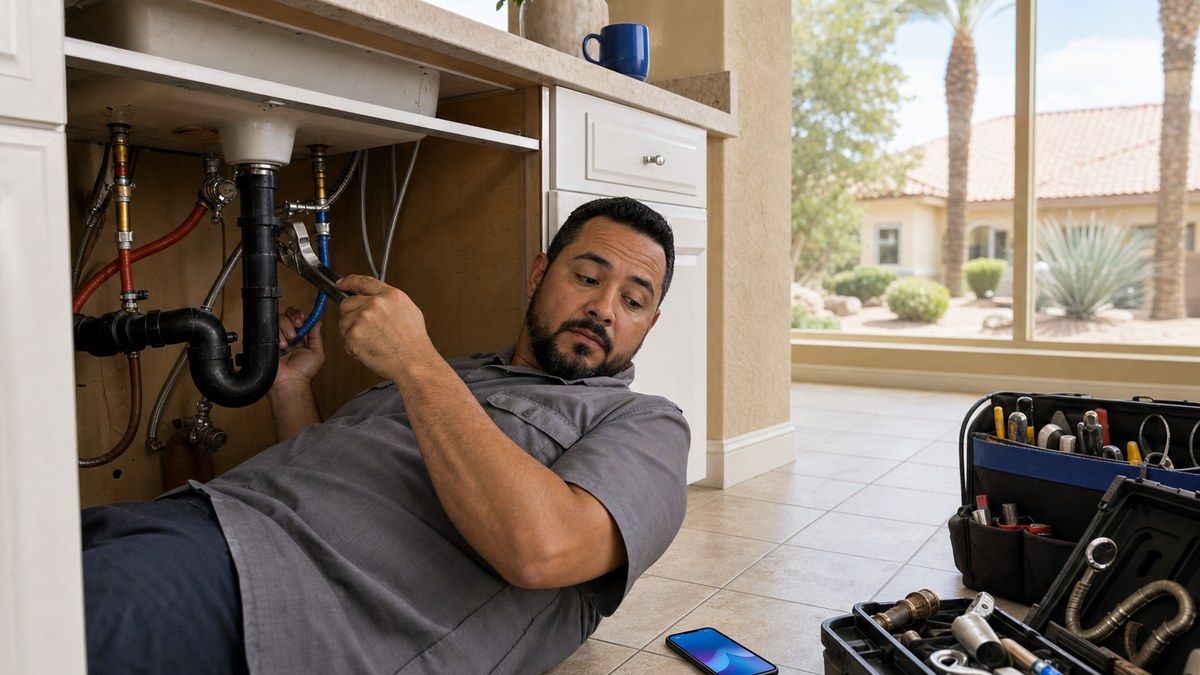
You're on a roof, under a sink or inside an attic when the phone rings. A good missed-call text gives that caller a reason to wait for you instead of dialing the next company. Here's what to send, when to send it and the texting rules every HVAC, plumbing, electrical and roofing business should know.
Key facts at a glance
- Callers hang up and move on: 80% of U.S. adults say they generally don't answer cellphone calls from unknown numbers, according to a Pew Research Center survey of 10,211 adults (July 2020, published December 2020). Many of your callers will text more easily than they'll pick up a callback.
- Speed wins: In a Harvard Business Review audit of 2,241 U.S. companies, firms that responded to a web lead within an hour were nearly 7 times as likely to qualify it as firms that waited longer (HBR, March 2011).
- Texts count as calls: The FCC has treated text messages as "calls" under the Telephone Consumer Protection Act since 2003 and reaffirmed it in a July 2015 ruling.
- Opt-outs must be honored fast: FCC rules effective April 11, 2025 let people revoke consent "by any reasonable means," and businesses must honor it within 10 business days.
- Register first: Unregistered business texts from regular 10-digit numbers (10DLC) have been blocked since February 3, 2025, per messaging provider Telnyx.
If you run a service business, a missed call text back is one of the simplest fixes you can make this week. You already paid for that phone call: the truck wrap, the Google listing, the ads, the referral from a happy customer. When you can't pick up, the caller doesn't usually leave a voicemail. They scroll back to the search results and try the next number.
A short text sent within minutes changes that moment. It tells the caller a real business saw them, it gives them an easy way to explain the problem, and it buys you time to finish the job you're on. This guide covers what to send, when, how to set it up without new software, and the federal texting rules that changed in 2025. It's written for owner-operated HVAC, plumbing, electrical and roofing companies, with notes for Las Vegas, but it works anywhere in the US.
What is a missed call text back?
A missed call text back is a text message sent to someone who called your business and didn't reach you. It can be sent by hand from your phone, by a business texting app, or automatically by a phone system that detects the missed call and replies within a minute or two.
It is not a marketing blast. It's a one-to-one reply to a person who just tried to reach you. That distinction matters for how customers feel about it and, as you'll see below, for how the rules treat it.
The goal is simple:
- Acknowledge the call fast, so the caller knows they reached a real, working business.
- Start a conversation in the caller's preferred channel. Many people would rather type "AC blowing warm air, 2-story house in Henderson" than sit through a callback from an unknown number.
- Capture the details you need to triage the job before you call back.
- Keep the lead from leaking to whichever competitor answers first.
A missed-call text isn't a replacement for answering the phone. It's a bridge. The best version buys you 20 minutes, collects the address and the problem, and ends with you calling back like a professional. If the text is the only thing that happens, you've just automated a different kind of silence.
Why do missed calls cost service businesses so many jobs?
Missed calls are part of trade work. You can't answer with a torch in one hand, from a ladder or while you're explaining a repair to a homeowner. The problem isn't missing the call. It's what happens next.
Two pieces of research explain why the next few minutes matter so much.
First, people don't like answering unknown numbers. In a Pew Research Center survey conducted July 13–19, 2020, eight in ten U.S. adults said they don't generally answer their cellphone when an unknown number calls; only 19% said they generally pick up, and 67% said they don't answer but will check a voicemail if one is left. So when you call back from a number they don't have saved, there's a good chance they won't answer you either. A text that arrives first, with your company name, makes your callback recognizable.
Second, interest fades fast. In their 2011 Harvard Business Review study, "The Short Life of Online Sales Leads," James Oldroyd, Kristina McElheran and David Elkington described an audit of 2,241 U.S. companies. Only 37% responded to a web lead within an hour, and 23% never responded at all. Companies that made contact within an hour were nearly seven times as likely to qualify the lead as those that waited longer, and more than 60 times as likely as companies that waited 24 hours or more. That study looked at web inquiries, not phone calls, but the lesson carries over: someone with a leaking water heater is not going to wait until tomorrow.
Put those together and the missed call is a fork in the road. If nothing happens, the caller dials the next company. If a clear, friendly text arrives in two minutes, many will reply and wait.
What should a missed call text back say?
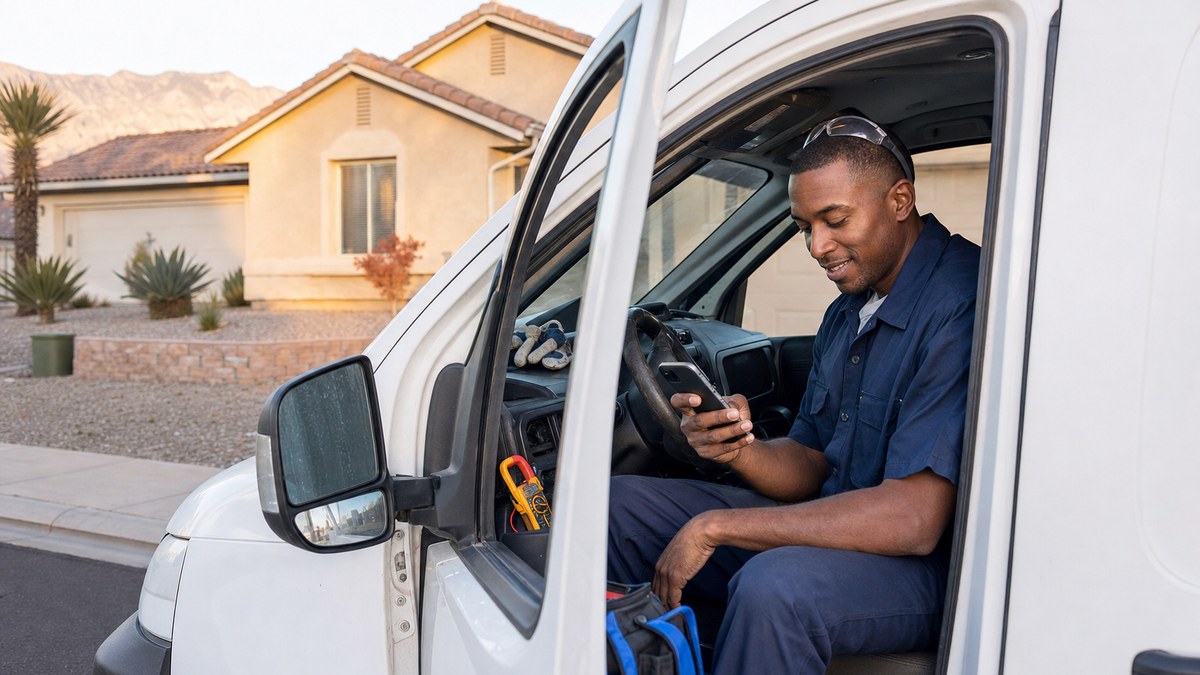
The best missed-call texts have four things in common: they're short, they name your business and a real person, they ask one easy question, and they promise a specific next step. Skip emojis, links to coupons and anything that reads like an ad. Here are templates you can adapt. Replace the brackets and keep them in your own voice.
The standard missed-call reply
"Hi, this is [Name] at [Company]. Sorry we missed your call. We're on a job right now. What can we help with? Reply here and we'll call you back within [30 minutes / the hour]."
After hours
"Hi, [Company] here. We're closed for the night and will call you back at [7 a.m.]. If it can't wait, reply with what's going on and the address, and we'll tell you if it's something we can come out for tonight."
Only offer emergency service if you actually provide it. If you don't, say so and give your opening time.
Emergency trades (HVAC, plumbing, electrical)
"Hi, [Company] here. Sorry we missed you. If you have no cooling, a leak, or something electrical that's sparking or smells hot, reply URGENT with your address and we'll call right back."
For anything involving fire, smoke, a gas smell or someone in danger, your website, voicemail greeting and texts should tell people to call 911 or their utility's emergency line first. A text-back is a scheduling tool, not an emergency service.
When you'll call back from a different number
"Hi, it's [Name] from [Company]. I'll call you in about 15 minutes from [number]. Save it so you know it's us."
Follow-up if they don't reply
Don't send a second text a few minutes later. Call back once, as promised. If they don't answer, leave a short voicemail. If they reply later, pick the conversation back up. One missed call earns one text-back and one callback, not a sequence.
Write the text the way you'd talk to a neighbor who caught you in the driveway. "Sorry we missed your call, what's going on?" beats any perfectly polished script. And put a promise in it you can keep. "Within the hour" is only useful if you call within the hour.
Missed call text back vs. voicemail, answering services and auto-attendants: which is best?
A missed-call text isn't the only way to cover the phone. Here's how the common options compare for a small service business. Costs vary widely by provider, so compare current pricing yourself.
| Option | Best for | Weak spots | What to watch |
|---|---|---|---|
| Voicemail only | Very low call volume; existing customers who know you | Many callers don't leave messages; slow to act on | Update the greeting with your hours and how to text you |
| Manual text back | Owner-operators who check the phone between jobs | Depends on you remembering, on your busiest days | Send from a registered business number, not a personal cell, if you text at volume |
| Automatic missed-call text | Busy crews; seasonal call spikes | Can feel robotic; texts sent to wrong-number or spam calls | 10DLC registration, opt-out handling, one text per missed call |
| Live answering service | Emergency trades; after-hours calls | Monthly cost; agents may not know your trade | Script for triage and what they can promise |
| Office person / dispatcher | Teams with steady volume | Payroll cost; lunch breaks and sick days still create gaps | Pair with a text-back for overflow |
Many small companies end up with a mix: an automatic text-back for daytime overflow, a clear voicemail greeting, and an answering service or on-call phone for after-hours emergencies.
Is it legal to text back a missed call?
In most everyday cases, a single, prompt, informational reply to someone who just called your business is low risk, but there are real rules, and they've changed recently. This section is general information, not legal advice. If you automate texting at volume, add marketing to your texts or buy software that sends texts on your behalf, talk to an attorney about your exact setup.
Here's what a service-business owner should understand:
- Texts are treated as calls. The Telephone Consumer Protection Act (TCPA) was written for phone calls, but the FCC has treated text messages as "calls" since 2003, and it reaffirmed that in its July 10, 2015 Declaratory Ruling and Order, according to a July 17, 2015 summary by the law firm Mintz.
- One-time replies to a consumer's request get special treatment. In that same 2015 ruling, the FCC said "on demand" texts, meaning immediate, one-time replies to a request the consumer started, that contain only the information requested, don't violate the TCPA. The ruling dealt with a consumer who texts first; whether a missed phone call works the same way hasn't been squarely decided, which is one reason to keep your text-back informational and limited to one message.
- Keep marketing out of it. A text that answers the caller's request is very different from a text that pushes a tune-up special. Promotional texts generally need a stronger form of consent. Save offers for customers who've clearly opted in.
- The "autodialer" question. In Facebook v. Duguid (April 1, 2021), the U.S. Supreme Court unanimously held that equipment counts as an "automatic telephone dialing system" only if it can store or produce numbers using a random or sequential number generator, as summarized by the Congressional Research Service. Many missed-call tools simply reply to the number that called, but other parts of the TCPA and state laws can still apply, so don't treat this as a blanket safe harbor.
- Courts now read the law for themselves. In McLaughlin Chiropractic Associates v. McKesson Corp. (June 20, 2025), the Supreme Court ruled 6–3 that district courts are "not bound by the FCC's interpretation of the TCPA," according to the law firm Steptoe. That means FCC guidance, including the 2015 on-demand ruling, can be persuasive, but a court may read the law differently. Another reason to keep things conservative.
What are the opt-out rules for business texts in 2025 and 2026?
The FCC's consent revocation order, published in the Federal Register on March 5, 2024, set out how people can tell a business to stop calling or texting. The core requirements took effect April 11, 2025:
- Any reasonable way counts. A customer can revoke consent by "any reasonable means," including replying with words like STOP, QUIT, END, CANCEL, UNSUBSCRIBE, REVOKE or OPT OUT, or by telling you in plain language. You can't require one special keyword or form.
- Honor it within 10 business days. Revocation requests must be honored within a reasonable time, not more than 10 business days.
- One confirmation, no selling. You may send a single confirmation text, within five minutes of the request, that doesn't include marketing.
One piece is still pending. The FCC's "revoke-all" rule, which would make a "stop" on one type of message apply to all of a business's robocalls and robotexts, was delayed from April 11, 2025 to April 11, 2026, and then, by an FCC order dated January 6, 2026, to January 31, 2027, according to a January 7, 2026 alert from the law firm Burr & Forman. The FCC also asked for comment in October 2025 on whether to change that requirement. The simplest way to stay ahead of it: when someone says stop, stop everything.
| Rule or requirement | Status | What it means for your text-back |
|---|---|---|
| Texts treated as "calls" under the TCPA | FCC position since 2003; reaffirmed July 2015 | Texting rules apply to your missed-call messages |
| Revoke consent by any reasonable means; honor within 10 business days | In effect since April 11, 2025 | Watch for plain-language "stop" replies, not just the keyword |
| One opt-out confirmation text, no marketing | In effect since April 11, 2025 | Keep the confirmation to "You won't receive more texts from us" |
| "Revoke-all" (one stop applies to all message types) | Delayed to January 31, 2027 | Treat any stop as stop-everything now |
| 10DLC registration for business texting | Unregistered traffic blocked since February 3, 2025 (Telnyx) | Register your brand and campaign before you switch on automation |

Do I need to register my number to send missed call texts?
If you send business texts from a regular 10-digit phone number through an app, a phone system or a CRM, almost certainly yes. US carriers route business-to-consumer texting from local numbers through a registration system called A2P 10DLC ("application-to-person, 10-digit long code"). According to messaging provider Telnyx's help center, you register a Brand (your business, tied to its EIN) and a Campaign (what kind of messages you send), both reviewed by The Campaign Registry and the carriers. Telnyx says unregistered 10DLC traffic has been blocked altogether since February 3, 2025, and warns that skipping registration can mean throttled traffic, higher fees and fines.
In practice, your texting provider usually walks you through it. A few tips that make approval smoother:
- Describe the campaign honestly, for example "replies to customers who called our business about service requests."
- Use the same legal business name and address that appear on your EIN paperwork.
- Include sample messages that look like your real text-back, with your company name in them.
- Explain how people opt in (they called you) and how they opt out (reply STOP or tell us).
If you text by hand from your own phone a few times a day, you're in a different situation than a business sending automated messages, but once you move to software, plan on registration.
How do you set up a missed call text back without new software?
You can start today with what you have, then automate once you've proven the routine works.
- Write your three templates. Standard, after-hours and urgent. Save them as text shortcuts or notes on your phone.
- Turn on missed-call notifications you'll actually see, and decide who on the team owns them each day.
- Set a rule: every missed call from an unknown number gets a text within 10 minutes during business hours, and a callback within the time you promised.
- Update your voicemail greeting to say "You can also text this number," if your line accepts texts.
- Log every missed call in a simple sheet: date, time, number, what they needed, outcome. After two weeks you'll know how many calls you miss and when.
- Then automate, if the numbers justify it. Most business phone systems, field-service apps and CRMs offer missed-call texting. Confirm 10DLC registration, opt-out handling and that it sends one message per missed call.
Don't forget the people on the other end. Exclude existing vendors, suppliers and known spam numbers from automatic replies, and make sure texts don't go out at 2 a.m. unless you truly offer overnight service.
How much is a missed call worth? A simple example
Every business is different, so run your own numbers. Here's a hypothetical example to show how the math works. Say an HVAC company misses 15 calls a week from new callers. If half of those were real service requests and the company books one in three of the requests it reaches, recovering just a third of the missed ones through a text-back would add about one booked job a week. At a hypothetical average ticket of $450, that's around $1,800 a month, before any replacement sales. Your real figures will be higher or lower, which is exactly why the call log in the step above matters: track it for two weeks and you'll know.
Find your biggest lead leak in 10 minutes
The free LeadLeak Audit Checklist is a 2-page self-check of how your business handles missed calls, new inquiries and open estimates. Join the LeadLeak list and download it instantly. LeadLeak is BuaFlow's lead recovery system for service businesses: trackers, ready-to-send scripts and simple automations.
Download the free LeadLeak Audit ChecklistWhy does this matter more for Las Vegas contractors?
Las Vegas call volume comes in waves. According to National Weather Service records reported by KTNV on September 2, 2024, summer 2024 was the hottest on record in Las Vegas, with an all-time high of 120°F on July 7 at Harry Reid International Airport and a record 11 straight days at 110°F or above. On days like that, every HVAC company in the valley is slammed, crews run behind and phones ring while technicians are in attics.
That's exactly when a homeowner with no cooling will call three companies in five minutes and book the first one that responds. A missed-call text that arrives in under two minutes, with a clear "reply with your address and we'll call you right back," can be the difference. The same pattern shows up for plumbers during a winter cold snap and roofers after a summer monsoon storm.
One more Nevada habit worth keeping: the Nevada State Contractors Board says all forms of business advertising must clearly display your license number. A plain reply to a caller isn't an ad, but if your texts, website or email signatures promote your services, including your license number keeps you consistent.
Before you buy more leads, count the calls you already miss. For most busy service businesses, a missed-call text and a same-hour callback is the cheapest growth available. It's the first piece of LeadLeak, and it pairs naturally with a written estimate follow-up routine for the jobs you've already quoted.
What are the most common missed-call text mistakes?
- Sending a sales pitch. "Sorry we missed you! 20% off tune-ups this week!" turns a service reply into marketing.
- Texting and never calling back. The text promises a callback. Keep the promise.
- Multiple automatic texts. One missed call, one text.
- Ignoring plain-language opt-outs. "Please don't text me" counts, not just STOP.
- Using an unregistered number for automation. Messages may be blocked, and you won't always know.
- Texting at odd hours. An automated reply at 3 a.m. can annoy more than it helps.
- No owner. If nobody is responsible for replies, they pile up like voicemails did.
Frequently asked questions
What is a missed call text back?
It's a short text sent to someone who called your business and didn't reach you, usually within a few minutes. It acknowledges the call, asks what they need and sets up a callback. It can be sent by hand or automatically by a phone system.
How fast should a missed call text go out?
As fast as possible: within a couple of minutes if automated, and within about 10 minutes if you send it by hand during business hours. Research on inbound leads, including a 2011 Harvard Business Review audit, shows interest drops quickly when businesses wait.
Is it legal to text someone who called my business?
A single, prompt, informational reply is generally low risk, and the FCC said in 2015 that one-time on-demand replies to a consumer's request don't violate the TCPA. But texts count as calls, courts aren't bound by FCC interpretations after a June 2025 Supreme Court ruling, and marketing texts need stronger consent. This is general information, not legal advice; ask an attorney about automated setups.
Can I include a promotion in my missed call text?
It's safer not to. Keep the text-back about the caller's request. Promotional messages generally require clearer consent, so save offers for customers who've opted in to marketing.
Do I have to register my business number to text customers?
If you send business texts from a standard 10-digit number through an app, phone system or CRM, plan on A2P 10DLC registration. Messaging provider Telnyx says unregistered 10DLC traffic has been blocked since February 3, 2025.
What if someone replies STOP?
Stop texting them. Under FCC rules effective April 11, 2025, people can opt out by any reasonable means, and you must honor it within 10 business days. You may send one confirmation text within five minutes, with no marketing.
What does the FCC "revoke-all" rule mean?
It would make an opt-out from one type of robocall or robotext apply to all of a business's automated messages. The FCC has delayed it to January 31, 2027. The simplest approach is to treat any stop request as stop-everything now.
Should I call or text back first?
Text first to acknowledge the call and set expectations, then call back as promised. Pew Research found 80% of US adults don't generally answer calls from unknown numbers, so a text with your company name makes your callback easier to recognize.
Will a missed call text back replace answering the phone?
No. It's a bridge until you can talk. For emergencies and after-hours calls, many trades also use an on-call phone or a live answering service.
How do I know if it's working?
Log every missed call for two weeks: time, what they needed, whether they replied and whether you booked the job. Compare it with the weeks before you started texting back.
Keep reading
Sources
- Pew Research Center: "Most Americans don't answer cellphone calls from unknown numbers," Colleen McClain, December 14, 2020 (survey July 13–19, 2020)
- Harvard Business Review: "The Short Life of Online Sales Leads," James B. Oldroyd, Kristina McElheran and David Elkington, March 2011
- Federal Register (FCC): "Strengthening the Ability of Consumers To Stop Robocalls," final rule, March 5, 2024
- Burr & Forman: "The FCC Delays Effective Date of TCPA Revoke-All Rule Until January 31, 2027," January 7, 2026
- Mintz: "FCC Releases Declaratory Ruling Clarifying and Expanding the Reach of the TCPA," July 17, 2015
- Steptoe: "The Supreme Court Makes Clear That District Courts Are Not Bound by the FCC's Interpretation of the TCPA" (McLaughlin Chiropractic v. McKesson, decided June 20, 2025)
- Congressional Research Service: "What Is an Autodialer (Part II)? The Supreme Court (Mostly) Resolves a Robocall Enforcement Question" (Facebook v. Duguid, decided April 1, 2021), April 2021
- Telnyx Support: "Frequently asked questions about 10DLC" (unregistered traffic blocked from February 3, 2025), accessed November 2026
- KTNV (citing National Weather Service records): "It's official: Las Vegas just had its hottest summer on record," September 2, 2024
- Nevada State Contractors Board: "Advertising Requirements," April 8, 2024
This article is general educational information, not legal advice. Rules on texting, calling and consent change and depend on your situation and state; consult an attorney for compliance questions, especially before automating texts. Revenue figures in the example are hypothetical. Images are illustrations, not photos of real customers or businesses.